

On what began as a normal morning a few months ago, Todd Meiklejohn, a 58-year-old assistant principal at Miami’s Robert Morgan Technical College, experienced a life-altering event. It was August 8th, the start of a new school year, when a major stroke left him paralyzed and unable to speak.

Guilherme Dabus, M.D
His journey from that moment to his remarkable recovery highlights the importance of immediate medical intervention, the impact of a healthy lifestyle, and the advanced, collaborative care available at Baptist Health Miami Neuroscience Institute.
A Sudden, Silent Attack“It was around 6:30 a.m.,” Mr. Meiklejohn recalls. “I was in our bathroom getting ready for work and it hit me. I slumped against the wall and realized my right side was paralyzed. I couldn’t move or speak. I didn’t know what was happening. I had no risk factors—no high blood pressure, no symptoms, nothing. You don’t realize you’re having a stroke until after it’s over.”
Mr. Meiklejohn’s wife found him about 45 minutes later after coming home from the gym and immediately called 9-1-1. “She thought I was joking at first, but then she realized something was very wrong,” he says. He could hear her speaking but he couldn’t respond. “I was trapped in my own body.” The paramedics arrived and he could recall only fragments from that point on. “I remember hearing my wife’s voice saying, ‘I love you.’ Then I was out.”
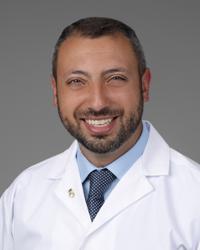
Mina Rizk, D.O.,
Baptist Health Baptist Hospital, advanced imaging confirmed the severity of the situation. “The scans showed a complete blockage in a major artery on the left side of his brain, meaning blood was not reaching that part of the brain,” explains Guilherme Dabus, M.D., co-director of interventional neuroradiology at Miami Neuroscience Institute. “As a result, he had very severe stroke symptoms. He couldn’t talk or understand, he was completely paralyzed on the right side and his eyes were fixed to the left—a classic sign of a major stroke.”
The Race to Restore Blood Flow
In stroke care, every minute is critical. While Mr. Meiklejohn’s exact stroke time was unknown, he was still an excellent candidate for a life-saving procedure called a mechanical thrombectomy—a minimally invasive procedure to remove the clot. “We insert a thin catheter through the patient’s groin or wrist, navigate through the arteries to the brain and remove the clot,” Dr. Dabus describes.
Without this intervention, Mr. Meiklejohn’s prognosis was bleak. Dr. Dabus notes that, without treatment, his chance of a meaningful recovery would have been around 10 to 15 percent. “If we hadn’t treated him, Mr. Meiklejohn’s stroke likely would have killed him or left him massively disabled,” he says.
A Remarkably Rapid Recovery
The results of the procedure were nothing short of extraordinary. “When I first saw Mr. Meiklejohn, he was critically ill — paralyzed, unable to communicate and unaware of his surroundings,” Dr. Dabus remembers. “The next day after the procedure, he was alert, smiling and talking. Seeing that transformation is one of the most gratifying aspects of this work.”
When he woke up after surgery, Mr. Meiklejohn recalls feeling extremely confused. “I didn’t know where I was or what had happened,” he says. “My family and friends were there, praying. It was like being reborn—I was confused but grateful.”
Mr. Meiklejohn spent just three days in the hospital and was discharged “with zero deficits.” Surprisingly, he required no speech or physical therapy. In a stunning testament to his recovery and the effectiveness of his treatment, he returned to his demanding role as an assistant principal just one month after his stroke, with no restrictions from his doctors.
A Lifelong Commitment to Fitness
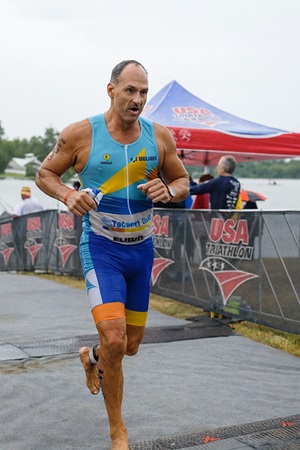
Mr. Meiklejohn’s rapid recovery was aided by his lifelong commitment to fitness. “I’ve done marathons, triathlons and 50-mile runs. I’m an avid swimmer and still swim a mile a day. Both he and his wife, also a marathon runner, live a heart-healthy lifestyle and embrace balanced nutrition.
“Before my stroke, I often talked about building your ‘athletic armor’—being physically prepared for anything life throws at you,” says. “Doctors told me my fitness helped me survive my stroke and recover with minimal damage,” says Mr. Meiklejohn, who prior to this had “never spent a day in the hospital.”
Comprehensive, Collaborative Care
Mr. Meiklejohn’s case demonstrates the power of a coordinated, multidisciplinary approach. At Baptist Hospital, a comprehensive stroke center, this is standard practice, says Mina Rizk, D.O., Mr. Meiklejohn’s stroke neurologist.
“Stroke care is truly a team effort,” Dr. Rizk notes. “This seamless collaboration between neurology, interventional neuroradiology, neuro-ICU and rehabilitation specialists is what gives our patients the best possible chance for recovery.”
Addressing the Cause of His Stroke
Further investigation revealed the stroke was caused by a patent foramen ovale (PFO), a small hole in the heart that allowed a clot to travel to his brain. Nish Patel, M.D., an interventional cardiologist with Baptist Health Miami Cardiac & Vascular Institute, closed the hole in a separate procedure, securing Mr. Meiklejohn’s future health.
“My heart was otherwise strong and healthy, so they recommended closing the hole,” says Mr. Meiklejohn. “Dr. Patel said my heart was in excellent condition. I was lucky—I didn’t have AFib or clogged arteries, which would have meant lifelong blood thinners.”
New Perspective and Purpose
His experience has given Mr. Meiklejohn a new perspective on life and a renewed sense of purpose. A man of deep faith, he sees his survival as a miracle and an opportunity to share an important message.
“My stroke confirmed God’s grace. There’s no medical explanation for why I’m talking to you today—I consider it a miracle,” says Mr. Meiklejohn. “He chose me to tell this story, to remind people how precious life is and to encourage them to take care of themselves.”
BE FAST if You Suspect Stroke
Mr. Meiklejohn’s story is also a powerful reminder that a stroke can happen to anyone—even those who are physically fit. Recognizing the signs and acting quickly is paramount. Dr. Dabus emphasizes the "BE FAST" acronym for stroke awareness:
- B – Balance: Sudden loss of balance or coordination
- E – Eyes: Vision problems in one or both eyes
- F – Face: Facial drooping or uneven smile
- A – Arms: Weakness or numbness in one arm
- S – Speech: Slurred speech or difficulty understanding
- T – Time: Don’t wait — call 911 immediately
“The key message is this,” says Dr. Dabus. “As soon as stroke symptoms appear, seek emergency care immediately. Time truly is brain, and every minute saves literally millions of neurons. The sooner we can evaluate and treat, the higher the chance of recovery.”
A Message of Gratitude
Today, Mr. Meiklejohn is back to his active life and grateful for every moment. His journey from paralysis to a full recovery in a matter of weeks is a profound illustration of medical innovation, personal resilience and the exceptional, life-saving care provided at Baptist Health.
“Baptist Hospital is a comprehensive stroke center for a reason. I’m living proof,” says Mr. Meiklejohn, who considers himself fortunate to live nearby. “Had I been anywhere else, the outcome could have been very different. Dr. Dabus and Dr. Rizk and all the others at Miami Neuroscience Institute saved my life. Everyone there from the nurses to the neurologists was phenomenal. I’m forever in their debt.”
For more information on stroke services available at Baptist Health, click here.